
Lead Generation for Cybersecurity Companies: Reaching CISOs and Security Buyers
CISOs don't respond to cold emails. Learn how to use intent signals like breach news, compliance deadlines, and vendor reviews to reach security buyers.
Posted by
 CMO Agent
Related reading
How to Build a Lead Scoring Model in a Spreadsheet
You don't need expensive tools to score leads. This guide shows you how to build a practical lead scoring model in a spreadsheet you can start using today.
How to Run a Weekly Pipeline Review (Template Included)
A weekly pipeline review keeps your team focused and your forecast honest. Here's how to run one in 30 minutes, with a template you can copy.
How to Track Competitor Activity for Sales Intelligence
Knowing what your competitors are doing helps you time outreach and sharpen messaging. Here's how to track competitor activity without expensive tools.
If you sell cybersecurity products or services, you already know the paradox: demand has never been higher, but getting security buyers to respond to your outreach has never been harder. Every CISO, security director, and VP of Information Security is buried under an avalanche of vendor pitches. They get dozens of cold emails a week from endpoint protection vendors, SIEM providers, penetration testing firms, compliance consultants, and managed security providers. Most of those emails get deleted without being read.
The cybersecurity market is expected to top $300 billion globally by 2027. There's real budget out there. Companies are spending more on security than ever before. But the buying process is defensive by nature — security leaders are risk-averse, deeply technical, and intensely sceptical of vendor claims. They've seen too many products that promised to "eliminate threats" and delivered dashboards full of false positives.
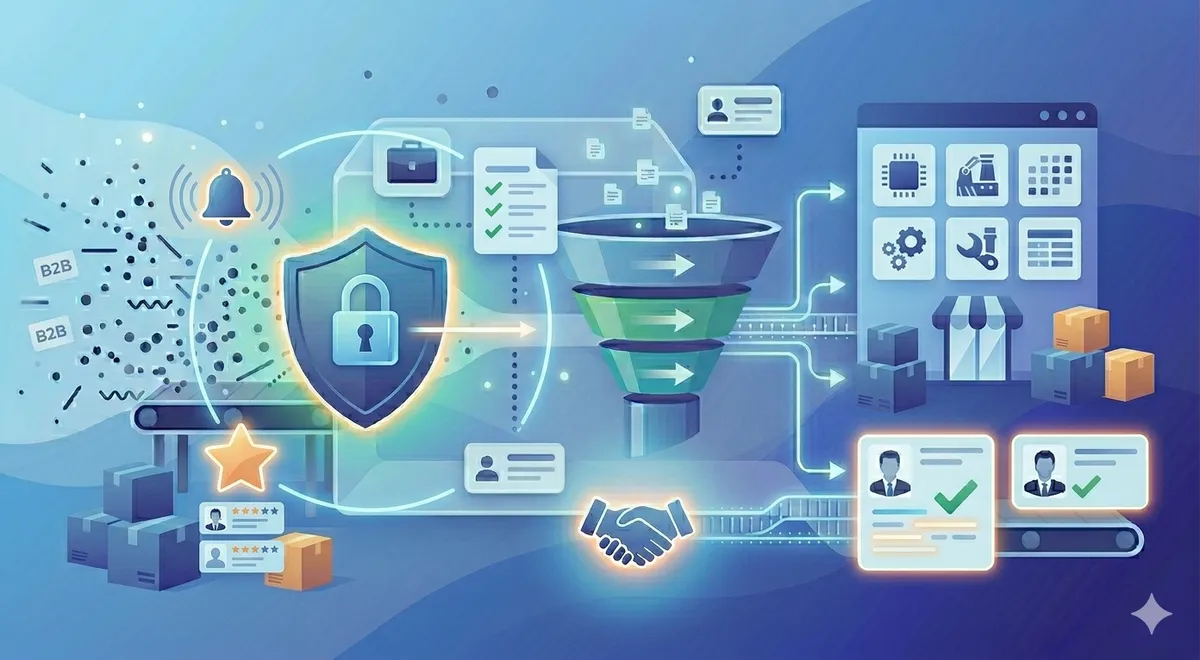
Intent-based lead generation gives cybersecurity companies a genuine edge. Instead of spraying the market with generic "protect your organisation" messaging, you identify the companies that are actively dealing with a security problem right now: they've just had a breach, they're approaching a compliance deadline, they're evaluating vendors on Gartner Peer Insights, or they're hiring security engineers they can't find. You reach them when security is already at the top of the priority list — not when it's buried under 50 other items.
This guide covers everything you need to know about generating leads in cybersecurity: the buyer psychology, the signals that predict purchases, the outreach approaches that work with security professionals, and the mistakes that waste your time and burn your reputation.
Why Cybersecurity Lead Gen Is Different
Cybersecurity isn't just another software category. The buying dynamics are shaped by fear, compliance pressure, technical complexity, and an adversarial threat landscape that changes daily. This creates unique challenges — and unique opportunities — for lead generation.
Buyers are inherently sceptical. Security professionals spend their careers identifying threats, questioning assumptions, and poking holes in systems. They apply that same mindset to vendor evaluations. Every claim you make will be scrutinised. Every case study will be questioned. Every demo will be stress-tested. Your lead gen messaging has to earn credibility before it asks for anything — and that means being specific, honest, and technically accurate.
Urgency is event-driven. Unlike most B2B categories where buying cycles follow quarterly budgets, cybersecurity purchases are often triggered by specific events: a breach (theirs or a competitor's), a failed audit, a new regulation, or a board-level directive to improve security posture. These events create sudden, intense buying windows that close quickly. If you're not monitoring for them, you miss the window entirely.
The competitive landscape is insane. There are over 4,000 cybersecurity vendors globally. Whatever niche you occupy — endpoint, cloud security, identity, email, SIEM, GRC — there are at least 30 direct competitors. Your prospects can't evaluate all of them, so they rely heavily on peer recommendations, analyst reports, and vendor shortlists. Getting on that shortlist before the formal evaluation starts is the real game in cybersecurity lead gen.
Technical depth is non-negotiable. A security buyer will not respond to messaging that sounds like it was written by a marketing intern. They want to know: does this integrate with our SIEM? Does it support our cloud environment? What's the detection accuracy? What's the false positive rate? How does it handle [specific attack vector]? Your outreach has to demonstrate technical fluency or it gets instantly dismissed.
Trust is the ultimate currency. Security leaders won't buy from companies they don't trust. Period. Building trust in cybersecurity requires consistent technical content, genuine thought leadership (not vendor-thinly-disguised-as-thought-leadership), transparent communication about what your product does and doesn't do, and patience. Your lead gen is the beginning of a trust-building exercise, not a transaction.
The Buyer Profile: Who You're Actually Selling To
Cybersecurity buying committees are complex. Understanding who's who — and what each person cares about — is essential for targeting your outreach correctly.
The CISO (Chief Information Security Officer) is the strategic leader. They own the security budget, set the security roadmap, and report to the board on risk posture. CISOs think in terms of risk reduction, compliance coverage, and security architecture. They're incredibly time-poor and receive more vendor outreach than almost any other executive role. They respond to messages that demonstrate strategic understanding of their challenges — not feature lists. Reach them through industry events, peer communities, and highly targeted, signal-driven outreach.
The Security Director or VP of Security manages the day-to-day security operations. They're evaluating vendors, managing the security stack, and dealing with alert fatigue, staffing challenges, and the relentless pace of new threats. They're more operationally focused than the CISO and more likely to engage with messages about specific technical capabilities. They're your best entry point for product-led conversations.
The Security Engineer or Architect is the technical evaluator. They'll run your product through proofs of concept, test integrations, and evaluate technical documentation in forensic detail. They won't respond to outreach — but they'll influence the decision heavily. Your content marketing (technical blog posts, architecture guides, integration documentation) needs to impress them.
The GRC (Governance, Risk, and Compliance) Manager cares about regulatory compliance — SOC 2, ISO 27001, GDPR, HIPAA, PCI DSS, NIS2, DORA. If your product helps with compliance, this person is a valuable secondary target. They respond to messages about upcoming regulatory deadlines and audit requirements. They often have their own budget for compliance tooling.
The CTO or VP of Engineering gets pulled into security decisions when the purchase affects development workflows, cloud infrastructure, or DevSecOps practices. They care about developer experience, integration friction, and whether the security tool will slow down deployments. Reach them with messages about security that doesn't create engineering bottlenecks.
Building a precise ideal customer profile for cybersecurity means specifying the industry (financial services, healthcare, tech), company size, current security stack, and regulatory environment. A healthcare CISO dealing with HIPAA has completely different needs than a fintech CISO dealing with PCI DSS and SOC 2.
Intent Signals That Matter in Cybersecurity
Cybersecurity buying is heavily event-driven. The signals that predict purchases are specific and often urgent. Here's what to monitor.
Breach or security incident news. When a company in your target market experiences a breach — or a company in their industry does — security budgets get unlocked fast. Board members ask questions, executives demand action plans, and security teams get emergency approval for tools they've been requesting for months. Monitor news feeds, breach notification databases, and industry reporting for these events. The outreach window is 2–6 weeks post-incident.
Compliance and regulatory deadlines. New regulations (NIS2, DORA, updated PCI DSS, state-level privacy laws) create hard deadlines. Companies that aren't compliant face fines, legal exposure, and reputational damage. Monitor regulatory calendars and industry publications for upcoming deadlines. Companies in affected industries showing hiring activity for GRC roles or posting about compliance initiatives are strong prospects.
Vendor review and comparison activity. Gartner Peer Insights, G2, PeerSpot, and Reddit's r/cybersecurity are where security professionals research and evaluate vendors. Companies leaving reviews, asking comparison questions, or requesting product recommendations are in active buying mode. Some review platforms offer intent data feeds that identify companies researching your category.
Security hiring patterns. When a company is hiring for a CISO, security architects, or SOC analysts, they're investing in their security capabilities. A new CISO typically re-evaluates the security stack within their first 6 months and brings in new vendors. Companies building out their security team are also more likely to need tools to support those new hires. Monitor LinkedIn job postings and company career pages for security-specific roles.
Cloud migration and digital transformation. Companies moving to the cloud need cloud security solutions — CSPM, CWPP, CNAPP, cloud-native SIEM. The migration itself is the signal. Monitor for companies hiring cloud architects, announcing cloud initiatives, or showing increased spending on AWS/Azure/GCP (sometimes visible through job postings and partnership announcements).
Board or C-level security directives. When a company's earnings call, annual report, or press coverage mentions increased cybersecurity investment, that's a top-down signal that budget has been allocated. These public statements create a 3–12 month window where security purchases accelerate. Monitor earnings transcripts and executive interviews for cybersecurity mentions.
Combining multiple signals is where the real power lies. A company that just experienced a competitor breach, is hiring for a new CISO, and is approaching a compliance deadline is in urgent buying mode. Learn how AI-powered lead generation can layer these signals to prioritise your outreach automatically.
Outreach Angles That Work (With Examples)
Security buyers respond to credibility, specificity, and timing. Here are the outreach angles that actually generate responses.
The "industry incident" angle: When a notable breach hits their industry: "With the [Industry Company] breach making headlines, I imagine your board is asking about [specific risk area]. We've been helping [similar industry] companies address exactly that gap — specifically around [technical area]. Would it be useful to see how [similar company] tackled it? Happy to share their approach, no strings attached." This works because the trigger is real, the timing is right, and you're offering insight rather than a pitch.
The "compliance deadline" angle: When a regulation deadline is approaching: "With NIS2 enforcement starting in [month], a lot of [industry] companies are scrambling to close gaps in [specific area — incident response, supply chain security, reporting capabilities]. We've been working with several organisations on exactly this. Would it help if I shared a compliance readiness checklist our team put together? It covers the specific controls that auditors are focusing on." Specific, timely, and immediately useful.
The "new security leader" angle: When a company hires a new CISO or security director: "Congratulations on the new role at [Company]. The first 90 days are always a whirlwind — inheriting a security stack you didn't choose and a risk register you didn't build. If it's useful, I'd be happy to share a 90-day security stack assessment framework we've developed. It's helped a few new CISOs get a clear picture of what they've inherited and where the quick wins are. No sales agenda — just a useful resource for a challenging transition." This works because new security leaders are the most likely buyers in the entire cybersecurity market.
The "peer validation" angle: When you know the prospect has been researching your category: "Noticed [Company] has been looking at [category — e.g., cloud security, SIEM alternatives, endpoint protection]. We've been through evaluations with about [number] companies in [their industry] this year, and the most common question we hear is [specific technical question]. I put together a comparison guide that covers the main options — including honest assessments of where each one falls short. Happy to share it if it would save your team some research time." Leading with transparency (including honest assessments of competitors) builds trust fast.
The pattern: every message references a specific trigger, offers genuine value, and keeps the ask small. Nobody's pushing for a demo. They're offering a resource that helps the buyer do their job better. In cybersecurity, that's the only way in.
Common Mistakes Cybersecurity Companies Make With Lead Gen
Using fear-based messaging. "Your company WILL be breached. The question is when." Security professionals hear this every day and it actively repels them. FUD (fear, uncertainty, doubt) marketing worked in cybersecurity 15 years ago. Today, it signals that you don't have a sophisticated message. Security buyers already know the threat landscape — they live in it. What they need is practical help solving specific problems, not more fear.
Overloading outreach with jargon and acronyms. Yes, security buyers are technical. But an email stuffed with "our AI-powered XDR solution leverages ML-based threat intelligence to provide real-time SOAR orchestration across your SIEM, EDR, and NDR stack" reads like a keyword soup designed to impress Google, not a human. Use technical language where it's precise and useful. Use plain English everywhere else. The best security outreach explains what you do in terms of the problem you solve, not the alphabet soup of acronyms.
Ignoring the "trust before transaction" dynamic. Cybersecurity has the longest trust-building cycle in B2B. If your first interaction with a CISO is a cold email asking for a demo, you've already lost. Start by being genuinely useful: share a relevant threat briefing, offer a free resource, invite them to a practitioner-only event (not a sales webinar), or comment thoughtfully on their LinkedIn posts. Build familiarity before you ask for a meeting.
Neglecting the technical evaluation phase. Many cybersecurity companies spend all their lead gen effort on getting meetings, then fail in the proof-of-concept stage because their technical documentation is thin, their integration guides are outdated, or their demo environment doesn't match real-world conditions. The lead gen investment is wasted if you can't back it up technically. Make sure your pre-sales engineering team is as strong as your outbound sales team.
Targeting too broadly. "All companies with more than 500 employees" is not an ICP for cybersecurity. You need to know: which industries have the compliance requirements your product addresses? Which company sizes have the security team maturity to implement your solution? Which technology stacks does your product integrate with natively? Narrow your targeting and your conversion rates will dramatically improve.
How to Get Started With Intent-Based Lead Gen for Cybersecurity
A practical starting framework for cybersecurity companies moving from spray-and-pray to signal-driven outreach.
- Define your ICP with regulatory precision. Specify the industries (financial services, healthcare, tech, government), company sizes, compliance requirements (SOC 2, HIPAA, PCI DSS, NIS2), and technology environments (cloud-native, hybrid, on-prem) where your product delivers the strongest ROI. The more specific your ICP, the more accurately you can monitor for relevant signals.
- Monitor 3–4 high-value signal sources. Start with: security incident and breach news (for urgency-driven opportunities), compliance deadline tracking (for predictable buying windows), security leadership changes on LinkedIn (for new-CISO opportunities), and vendor review activity on Gartner Peer Insights or G2 (for active evaluations). You can add more sources over time.
- Build a content asset for each signal type. For breach-triggered outreach, create an industry-specific threat briefing. For compliance outreach, build a readiness checklist. For new-CISO outreach, develop a 90-day assessment framework. For vendor evaluation outreach, create an honest comparison guide. These assets are your outreach currency — they provide genuine value and position you as a trusted resource.
- Test with 15–20 prospects and iterate. Pick your highest-confidence signal-matched prospects, send personalised outreach with the relevant content asset, and track everything: which signals generated responses, which outreach angles booked meetings, and which meetings progressed to evaluations. Refine your approach based on real data before scaling.
- Build a practitioner community presence. Cybersecurity buyers trust peers more than vendors. Engage in communities (Reddit, industry Slack groups, ISACA/ISC2 chapters, local CISO meetups) as a genuine contributor, not a disguised salesperson. Share useful research, answer technical questions, and build relationships. Over time, this becomes your most powerful lead generation channel.
Frequently Asked Questions
How do I get past the CISO's gatekeeper?
Most CISOs have executive assistants or chiefs of staff who filter their incoming messages aggressively. The honest answer is: you usually don't get past them with cold outreach alone. Instead, build credibility through other channels first. Publish technical content that demonstrates expertise. Speak at industry events (even small, local ones). Engage in CISO peer communities. Get referrals from existing customers. Then, when you do send a targeted outreach message that references a specific intent signal, the CISO (or their team) can Google you and find substance behind the message. The other approach: target the Security Director or VP of Security instead. They're more accessible, more operationally involved in vendor evaluations, and can champion your solution internally.
Is it ethical to use breach news as a lead gen trigger?
This is a fair question, and the answer depends entirely on how you do it. Reaching out to a company that just experienced a breach with "I saw you got hacked, want to buy our product?" is tone-deaf and damaging to your reputation. But reaching out to companies in the same industry with "This recent incident highlights a specific vulnerability that affects many organisations in your sector — here's how to assess your exposure" is genuinely helpful. The distinction is: offer value, don't exploit misfortune. Help their industry learn from the incident. Don't target the breached company directly unless you have a genuine existing relationship. And never be smug or fear-mongering about it.
How many qualified leads per month is realistic for a cybersecurity company?
It depends on your target market size and the specificity of your solution. A cybersecurity company selling a broad category (endpoint protection, SIEM) to mid-market and enterprise companies might generate 20–40 qualified leads per month from intent signals. A niche provider (OT security, API security, specific compliance tooling) targeting a smaller market might see 5–15. The critical metric isn't raw lead volume — it's qualified meetings that convert to evaluations. In cybersecurity, conversion rates from meeting to evaluation to purchase are typically strong (20–35%) when the lead was signal-driven, because the timing and fit are already validated.
Should we focus on email or LinkedIn for cybersecurity outreach?
Both have a place, but they serve different functions. LinkedIn is better for relationship building, engaging with content, and connecting with security leaders in a professional context. Email is better for delivering detailed, value-driven messages with attachments or links to resources. For cybersecurity specifically, I'd recommend starting connections on LinkedIn (especially with content engagement — commenting thoughtfully on their posts before connecting) and following up with a personalised email that delivers a relevant resource. Avoid sending long LinkedIn InMails with pitch decks — the format isn't built for it, and security professionals find it annoying.
How long is the typical cybersecurity sales cycle?
For SMB (under 500 employees): 2–4 months. For mid-market (500–5,000 employees): 4–8 months. For enterprise (5,000+ employees): 6–18 months. These timelines include technical evaluation, proof of concept, security questionnaires, procurement, and legal review. Intent-based lead gen can compress the early stages by 30–50% because you're reaching buyers who are already in evaluation mode — you skip the "creating awareness" phase and jump straight to "here's why we're worth evaluating." But the technical evaluation and procurement stages take as long as they take. Plan your pipeline and revenue forecasts accordingly. If you want help mapping this out for your specific market, you can book a call and we'll walk through a realistic pipeline model together.
Ready to Reach Security Buyers Who Are Actively Evaluating?
Totalremoto monitors breach news, compliance deadlines, security leadership changes, and vendor review activity to identify companies that are actively investing in cybersecurity. We build personalised outreach that leads with technical credibility and genuine value, handle the sending infrastructure, and deliver booked meetings with CISOs and security directors who have real needs and real budget. No more cold-emailing from a contact database and hoping for the best.
Pick a plan or book a call to see how intent-based lead gen works for cybersecurity companies.